- Cempaka Putih, DKI Jakarta Pusat 10510



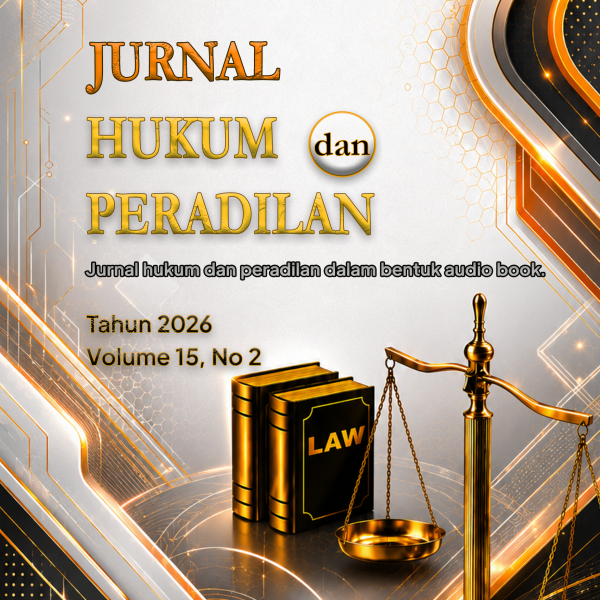
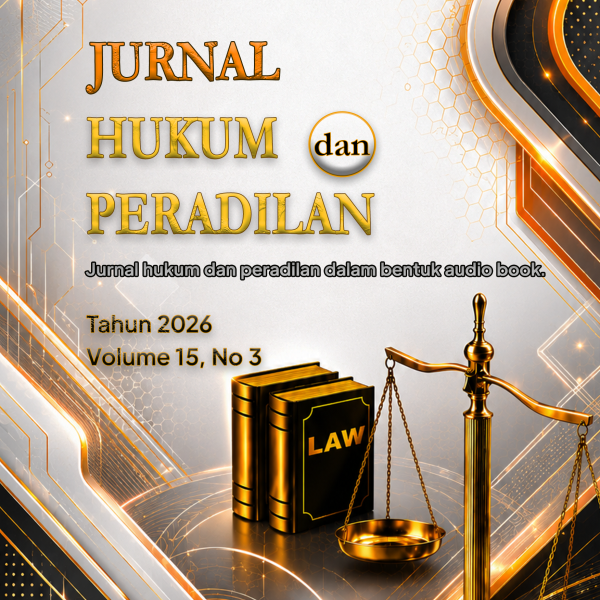
Jurnal Tahun 2026
Volume 15, No 1
1. Prospects of AI Use in The Supreme Court: Comparison of Canada and Indonesia
Abstrak.
The opportunities and challenges of applying artificial intelligence (AI) in law enforcement are the main focus of a comparative study between the Indonesian Supreme Court and Canadian judicial guidelines. In Canada, AI has been used to support transparency, speed, and consistency in decisions through decision prediction, case management, and legal data processing. This serves as an important inspiration for Indonesia, which is currently exploring the use of similar technology in its judicial system. The main challenges faced by Indonesia include limited digital infrastructure, the absence of comprehensive regulations governing the use of AI, and concerns regarding the integrity of decisions and the principle of justice. A normative juridical method combined with a comparative literature review was employed to examine the regulatory frameworks, court practices, and applications of artificial intelligence in each country. The study’s findings indicate that despite the significant challenges in Indonesia, the opportunities for AI implementation remain vast. AI implementation must be supported by adaptive national policies, capacity building for judicial officials, and continuous oversight to maintain the integrity of decisions and legal certainty. This study provides strategic recommendations for strengthening Indonesia’s legal system in an increasingly complex and dynamic digital era.
2. Pluralism and Justice in Islamic Inheritance Law
Abstrak.
This study aims to uncover the historical-philosophical foundations of pluralism in Islamic inheritance law through the Prophet Muhammad’s mechanism of accommodation towards pre-Islamic traditions (‘urf), as well as to provide an integrative methodological framework for contextualizing inheritance justice. This study is significant because it addresses the limitations of previous studies, which were descriptive and partial, by exploring the dynamic roots of Sharia in responding to socio-historical realities. This study employs an integrative qualitative approach with three analytical frameworks: first, philosophical-historical: tracing the dialectic between universal values (tsawābit) and contextual values (mutaghayyirāt) in inheritance law through asbāb al-nuzūl and pre-Islamic Arab social realities. Second, thematic-holistic: connecting inheritance verses (QS. An-Nisā’: 11-12) with the principle of justice across texts (QS. Al-Ḥujurāt: 13, Al-Mā’idah: 8) and maqāṣid al-syari’ah (hifẓ al-māl, al-nafs, al-nasl). Third, empirical-contextual: testing the implementation of universal-particular values in the Indonesian context. Based on this study, it can be concluded that the 2:1 inheritance ratio is responsive-contextual to the pre-Islamic Arab social structure (financial responsibility of men), not a rigid rule. The principle of universal justice in the Qur’an (‘adl, maṣlaḥah) opens space for recontextualization in the modern era, such as the Minangkabau hybrid model or the 1:1 share allocation that considers women’s economic contributions. This integrative framework of text-maqāṣid-contextuality offers a new perspective in inheritance ijtihad, promoting flexibility in Sharia based on substantive justice without disregarding the authenticity of the text. Policy implications include strengthening consultation mechanisms in the Compilation of Islamic Law (Article 183) and progressive reinterpretation in religious courts.
3. Regulatory Reform in The Era of Digital Constitutionalism
Abstract.
The digital era has permeated the legal and justice systems, posing serious challenges to constitutional justice. AI can replicate algorithmic bias and reinforce inequality. Indonesian regulations (the PDP Law and the ITE Law) are insufficient to address AI ethics and procedural justice. This gap requires a robust ethical framework for technology to be a tool of justice. This study aims to formulate ethical standards and principles based on Siyasah Dusturiyah, integrating them into Digital Constitutionalism to fill this legal void. The study uses a normative legal method (doctrinal legal research) with legislative and comparative approaches. A descriptive-comparative analysis examines the Indonesian legal framework alongside EU regulations (the EU AI Act and the GDPR) to identify best practices. Results show significant gaps in Indonesian law on AI ethics, in contrast to the EU’s proactive integration of ethical standards. Thus, this study proposes adapting three principles Ethical Impact Assessment, Human Oversight, and Right to Be Fixed as the ethical foundation of Indonesian Digital Constitutionalism. Such adaptation is crucial to ensure accountability of digital systems and strengthen citizens’ constitutional rights.
4. Living Law on The Margins
Abstrak.
The recognition of living law in society, as stipulated in Article 2 of Law Number 1 of 2023 on the Indonesian Penal Code (KUHP), appears to be a progressive step toward respecting legal pluralism in Indonesia. However, this recognition is conditional and places customary law in a subordinate position to state law. This article critically examines how Article 2 of the KUHP systematically narrows the space for customary law and disregards the sociological reality of living legal traditions. This study employs a normative juridical research method, focusing on the analysis of statutory provisions, legal doctrines, and relevant academic literature. Customary law, which has long been effective in resolving social conflicts, is marginalized due to its perceived incompatibility with formalistic and universal legal principles. This article proposes a deliberative approach as an alternative through equal and dialogical engagement between state and customary legal systems, emphasizing affirmative recognition that respects the autonomy of local legal communities. In doing so, recognizing customary law should not be a limiting instrument but a means to strengthen contextual justice within Indonesia’s diverse society.
5. Reformulation of Narcotics Regulations to Eliminate Inconsistent Interpretation for Narcotics Offenders
Abstrak.
A considerable number of correctional facilities and detention centres in Indonesia are currently grappling with overcrowding issues, primarily driven by inmates involved in narcotics-related cases. This research aims to investigate the inconsistencies within narcotics regulations that lead to diverse interpretations of the law by law enforcement officials. The pressing aim of this study is to reduce the population of narcotics offenders serving prison sentences, thus alleviating the problem of overcrowding. This research adopts a qualitative methodology focusing on legislative and conceptual analysis. The research findings underscore the necessity for a revision of narcotics legislation. More specifically, this involves categorizing narcotics offenders based on their intent, making a clear distinction between “narcotics users,” encompassing individuals who use drugs, suffer from addiction, or have become victims of narcotics abuse, and “narcotics profiteers,” which includes those engaged in selling, facilitating transactions, manufacturing, or inducing others into narcotics abuse and victimization. In summary, this research highlights that consistency is needed in the regulation of narcotics articles by creating clear categories of behavior that are included in narcotics crimes to eliminate the various interpretations of the law, ultimately ensuring a fair and legally certain criminal justice system.
6. Constitutional Internalization of Islamic Law in a Pancasila State
Abstrak.
This article aims to provide a positive perspective on the contribution of Islamic law since the birth of the Unitary State of Indonesia (NKRI), UUD 1945, and Pancasila. The research was conducted through a literature study tracing the history of implementing Islamic law and its internalization into the national legal system, alongside the development of an increasingly religious Indonesian population. In the post-Reformation era, Islamic law appears to have gained momentum in shaping national law. The romanticism of the nation’s religious ambition to believe in God, with the obligation to carry out sharia for its adherents, comes back alive and rises. That nation’s religious ambition is recorded in the history of the Pancasila version of the Jakarta Charter in 1945. This spirit has been integrated into the history of the birth of the Republic of Indonesia, the UUD 1945, and Pancasila, and remains alive and deeply rooted in the nation spirit. The study shows that in the NKRI, Islamic law could be applied lawfully. It is implemented constitutionally based on Pancasila. The integration of Islamic law that characterizes national law can work without reducing the rights and obligations of adherents of other religions in Indonesia.
7. Giving Voice to Child Victims
Abstrak.
Sexual violence against children constitutes a grave violation of human dignity and causes long-term psychological and developmental harm. Although Indonesia’s Law No. 12 of 2022 on Sexual Violence Crimes (UU TPKS) reflects a victim-oriented substantive framework, criminal procedure law remains largely offender-centered. Neither the current nor the newly enacted Criminal Procedure Code recognizes the Victim Impact Statement (VIS) as a formal mechanism for conveying victims’ experiences during criminal proceedings. This study examines the urgency of VIS in realizing victim-centered justice and formulates a regulatory model for its integration into UU TPKS. Using normative juridical research with statutory, conceptual, and comparative approaches, the study analyzes relevant legislation, judicial regulations, and scholarly literature. The findings reveal a regulatory gap between substantive victim protection and procedural mechanisms. This article proposes standardized VIS provisions to strengthen restorative justice and ensure judicial decisions reflect the recovery and dignity of child victims.
8. Deviation From The Concept of Levering in Sale and Purchase Transactions Through Criminal Charges of - Embezzlement and/or Fraud Based on Goods Invoices
Abstrtak.
Criminal allegations of embezzlement in sale-and-purchase transactions, most frequently initiated by sellers, constitute tangible evidence of adeviation from the legal concept oflevering (delivery). Accordingly, the legal issue addressed in this research concerns thedeviation from the concept ofleveringin relation to theprinciple of freedom of contractand thecriminalization of embezzlement and/or fraud arising from non-performancein sale and purchase transactions evidenced by goods invoices. This issue arises from the seller’s assumption that agoods invoice does not constitute a binding agreement, which is based on the belief thatownership of the goods remains with the seller despite delivery to the buyer. This research seeks to clarify thelegal concept ofleveringin sale and purchase transactions and its relationship with theprinciple of freedom of contract, particularly in the context of goods invoices, with the aim of preventing the transformation of civil sale and purchase agreements into criminal cases, through legislative approaches, case studies, and conceptual
Evi Kongres, Astrid Athina Indradewi, Johanes Dipa Widjaja Deviation From The Concept ofLeveringin Sale and Purchase Transactions Through Criminal Charges of Embezzlement and/or Fraud Based on Goods Invoices 198 analysis In the cases analyzed, it appears that courts generally fail to apply thetwo principal benchmarks established in jurisprudence, namely (i) the existence of a legally valid agreement, and (ii) the absence of bad faith. As a result, judicial decisions continue to blur the boundary between civil liability and criminal liability. Thenovelty of this researchlies in emphasizing that the concept of levering grounded in the principle of freedom of contract, cannot be applied within the framework of the criminal offense of embezzlement.
Audiobook Jurnal
1. Prospects of AI Use in The Supreme Court ...
2. Pluralism and Justice in Islamic Inheritance Law ...
3. Regulatory Reform in The Era of Digital Constitutionalism ...
4. Living Law on The Margins ...
5. Reformulation of Narcotics Regulations to ...
6. Constitutional Internalization of Islamic Law ...
7. Giving Voice to Child Victims ...
8. Deviation From The Concept of Levering ...